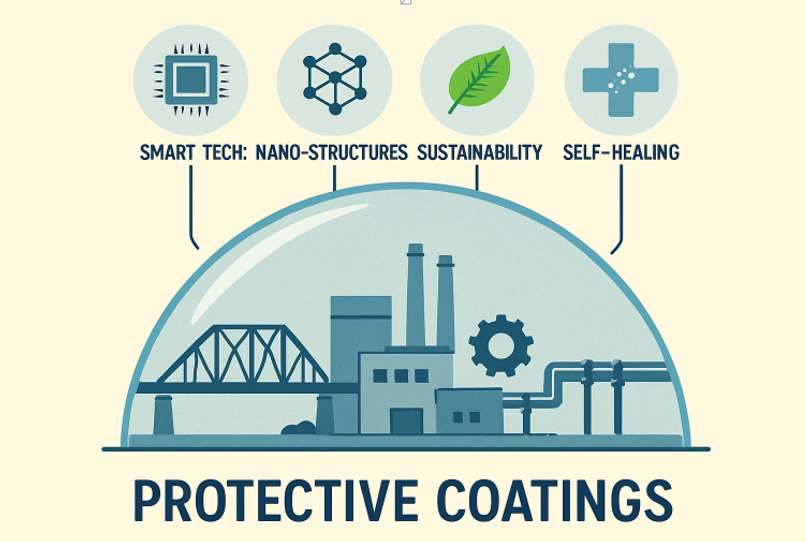
Innovative Trends in Protective Coatings for Modern Industries

In today’s rapidly evolving industrial landscape, safeguarding assets has never been more crucial. Protective coatings have emerged as a vital component in shielding infrastructure, machinery, and products against environmental hazards and mechanical stresses. Innovative advancements in coating technologies are transforming performance, durability, and sustainable practices across multiple sectors. For leaders seeking to future-proof their operations and minimize costly downtime, staying abreast of these developments is essential. To explore high-performance solutions for your business, visit Mbcoatings.com.
Recent breakthroughs are not only enhancing the resilience of protective coatings but also introducing new functionalities. From adaptive responses to self-repairing abilities, coatings are now engineered to deliver more than just surface-level protection. The integration of artificial intelligence and nanotechnology is opening the door to predictive maintenance and extended asset longevity, supporting industries in their quest for efficiency and environmental responsibility.
Smart Coatings: The Future of Adaptive Protection
One of the most exciting advancements in protective coatings is the development of smart coatings and responsive materials designed to adapt to changing environmental conditions. These coatings can sense external stimuli, such as temperature, moisture, or chemical exposure, and adjust their physical or chemical properties accordingly. For example, thermochromic coatings can change color when exposed to heat or UV light, providing a visual indicator for maintenance needs or exposure risks. This dynamic behavior reduces downtime and helps industries respond quickly to problems before significant damage occurs.
Nanotechnology: Enhancing Coating Performance
Nanotechnology is redefining the boundaries of what protective coatings can achieve. By incorporating nanoparticles, coatings achieve exceptionally high resistance to corrosion, UV degradation, abrasion, and microbial attack, with minimal changes in thickness or appearance. In sectors ranging from electronics to healthcare, nanocoatings facilitate ultra-thin, transparent layers that deliver robust protection. Their ability to conform to microscopic surface features also ensures seamless coverage and superior barrier properties, which is why their adoption continues to rise among manufacturers seeking the highest quality and reliability.
Sustainable Coatings: Eco-Friendly Solutions
The demand for environmentally responsible solutions is accelerating innovation in sustainable coatings. Today’s eco-friendly coatings emphasize lower volatile organic compounds (VOCs), water-based formulas, and biodegradable ingredients. These advancements not only achieve regulatory compliance but also decrease occupational hazards and environmental impact during both application and disposal. Major industry players are investing in green technologies, ensuring high performance is delivered without compromising sustainability.
See also: The Growing Influence of Tech Startups in Global Economies
Self-Healing Coatings: Prolonging Asset Lifespan
A breakthrough in prolonging asset durability comes from self-healing coatings, engineered to autonomously repair minor cracks and scratches. These advanced coatings encapsulate healing agents or employ reversible chemical bonds that activate upon damage. In critical applications such as in aerospace or marine environments where prolonged exposure and difficult maintenance are typical, self-healing coatings reduce repair costs and extend the service life of equipment. This innovation significantly cuts maintenance budgets and reduces downtime, strengthening operational efficiency across industries.
AI Integration: Predictive Maintenance and Monitoring
The emergence of artificial intelligence (AI) in protective coatings is ushering in a new era of predictive maintenance. Next-generation coatings embedded with micro-sensors can collect and transmit real-time environmental and structural data. Connected to AI-powered analytics platforms, this data enables early detection of anomalies, allowing facility managers to intervene preemptively. The ability to address issues before failure or degradation not only minimizes operational interruptions but also maximizes safety and cost-effectiveness across large-scale infrastructure. This digital transformation is expected to revolutionize asset management strategies worldwide.
Hybrid Coatings: Combining Strengths for Superior Protection
Hybrid coatings combine the best properties of multiple materials, such as ceramics, metals, and polymers, to create high-performance solutions customized for specific environments. These hybrids are particularly valuable where single-component coatings can’t meet complex or extreme requirements, such as in high-wear or high-corrosion industrial settings. By blending the characteristics of each component, hybrid coatings can offer unparalleled resistance to chemicals and mechanical stresses while retaining ease of application, creating tailor-made protection for critical assets.
Market Growth and Industry Adoption
The market for advanced protective coatings is experiencing robust growth, driven by industrial demand for efficiency, sustainability, and lower total cost of ownership. Research and development efforts are yielding more versatile and agile coating solutions, such as UV-curable coatings and smart polymers. The ongoing emphasis on eco-friendly and high-performance formulas is attracting significant investment and accelerating the adoption of next-generation coatings worldwide. Industries across manufacturing, automotive, marine, and infrastructure are leading the charge toward safer, more resilient, and sustainable surface protection.
Conclusion
Protective coatings are evolving at an unprecedented pace, powered by innovation in smart materials, nanotechnology, AI-powered sensing, and sustainable chemistry. As these technologies mature and become more widely available, industries benefit from longer-lasting, more environmentally responsible, and higher-performing protective solutions. Staying informed about these emerging trends is crucial for organizations looking to secure their investments, comply with regulations, and optimize operational longevity in the modern era.